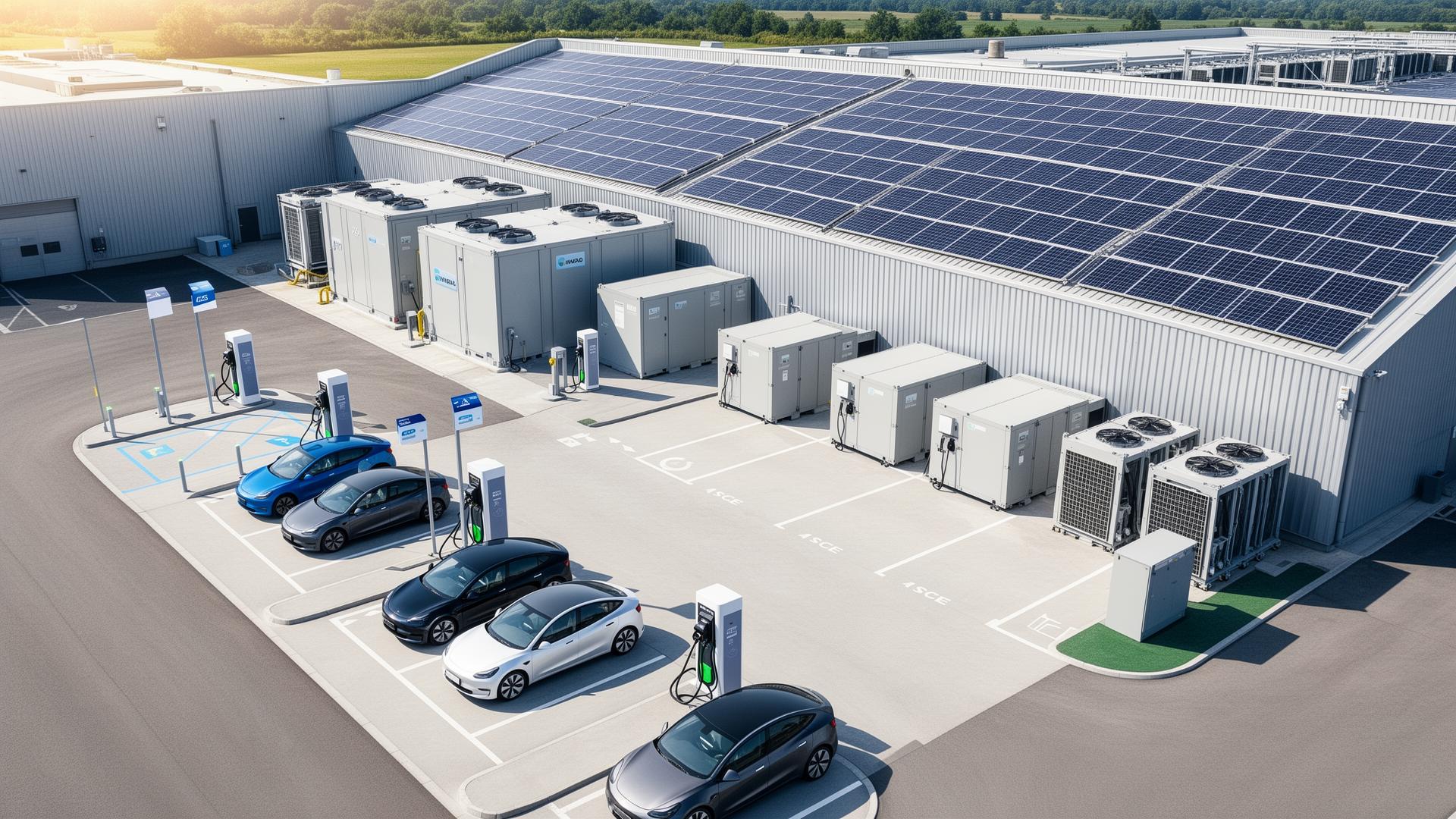
You have the assets. You don't have the operating envelope.
Youree calculates exactly what your site can safely absorb — across HVAC, storage, process loads, and charging — then orchestrates every asset within that verified limit. Defer the grid upgrade. Activate your DR program.
Two outcomes. One verified constraint.
Engineering Principles
Why estimation fails. Why physics doesn't.
Three constraints that cannot be traded away. Physics over heuristics.
Topology first, then orchestration
Orchestrating loads without a verified electrical topology is a liability, not an optimization. Youree reconstructs your real site graph — breaker states, conductor impedances, transformer taps — before issuing a single setpoint.
WLS reconciliation, not AI guesswork
Youree fuses SCADA, EPMS, and DCIM measurements through Weighted Least Squares. Conflicting readings are flagged and resolved. The headroom number you get is defensible to your insurer and your utility.
Live breaker state, not PDF diagrams
Your PDF one-lines are a snapshot from the last maintenance window. Youree tracks real-time breaker position and recalculates the load envelope continuously. The constraint your orchestration runs against is the one that actually exists right now.
Why asset silos fail on constrained sites
Each asset is controlled by its own system. Each system optimizes locally. None arbitrates the shared constraint.
Simultaneous peaks and limit violations
Operational conflicts between assets
Underused flexibility due to lack of coordination
Costly upgrades and delays
Smart charging improves EV sessions - but does not address site-level constraints.
What Youree unlocks
One operating envelope. Two outcomes.
The same verified constraint that protects your operations is the one that makes your flexibility bankable.
VALUE STREAM 01
Defer the upgrade. Protect the operations.
Youree computes your N-1 safe headroom from the real topology and orchestrates all assets within it. Critical loads are protected unconditionally. New loads are added within the existing service agreement.
- →Service upgrade CAPEX deferred or eliminated
- →New loads added without interconnection queue wait
- →Non-interruptible assets protected at the constraint layer
VALUE STREAM 02
Activate your DR program. Without operational risk.
When your operating envelope is verified and your flexible assets are characterized, Youree constructs demand response offers for CAISO, PJM, and ERCOT — with a guarantee that delivery won't compromise critical operations.
- →BESS, HVAC thermal inertia, and shiftable loads characterized and committed
- →DR offers constructed against contingency-compatible headroom only
- →Markets: PJM DR, CAISO DRAM, ERCOT demand response, ISO-NE capacity
Field Deployments
Deployed on constrained sites
View all use cases→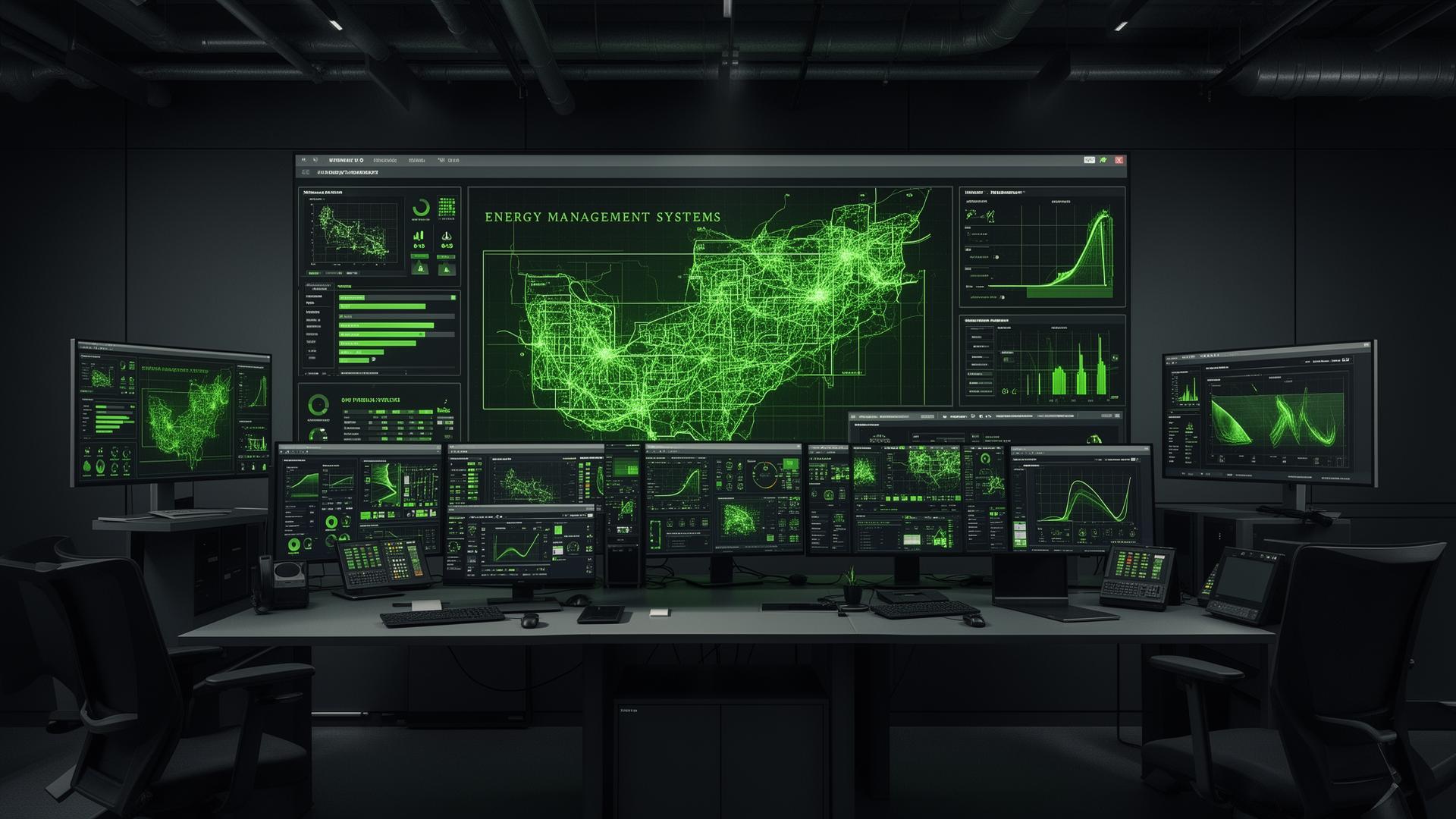
Data Center — Colocation / Hyperscale
Challenge
BMS cooling telemetry and EPMS electrical data sit in separate systems with no shared topology model. Operators apply conservative NEC-based derating to avoid cascade trips — leaving measurable capacity unused.
Result
15% additional usable headroom identified after cross-system WLS reconciliation, while maintaining verified N-1 contingency on all critical feeders. Dynamic load envelope prevents cascade failures during peak cooling cycles. (Based on comparable 2–4 MW colocation configurations.)
Industrial — Manufacturing / Fleet Depot
Challenge
Utility service agreement is at 80–90% of contracted demand. Adding EV charging or new production loads would trigger a service upgrade request — currently 18–24 months in the interconnection queue.
Result
New loads added within existing service agreement by topology-aware orchestration of production, HVAC, and BESS under a shared site envelope. Service upgrade deferred. (Based on 1–3 MW depot configurations with 20–60 EV charging ports.)
Corporate Campus — Microgrid / Multi-Building
Challenge
Post-maintenance topology uncertainty: field reconfigurations are not reflected in SCADA tags or PDF drawings. Operators cannot safely calculate available headroom after switching operations.
Result
Live topology restored to L6 Trusted state within one operational cycle. 25% additional renewable dispatch capacity confirmed without voltage violation or thermal overload. (Validated on campus microgrids with 3–8 switchable feeders.)
Critical Infrastructure — Planned Maintenance Windows
Challenge
During N-1 conditions or generator-backed operation, available headroom drops significantly and boundaries shift. Static load limits cannot adapt to the degraded topology in real time.
Result
Orchestration constraints recalculated automatically against the degraded topology. Non-interruptible loads protected. No manual load-shedding required during the maintenance window. (Applicable to sites with 500 kW–5 MW backup generation.)
Differentiation
Operations first. Flexibility if it fits.
Youree turns uncertainty into usable capacity without sacrificing site operations.
| Criterion | Without Youree | With Youree |
|---|---|---|
| Operating model | ✕Asset-by-asset optimization | ◆System-wide orchestration |
| Capacity view | ✕Static conservative limits | ◆Calculated usable headroom |
| Decision basis | ✕Guesswork and manual trade-offs | ◆Scenario-driven analysis |
| Flexibility | ✕Primary objective | ◆Used only when it fits operations |
Next Step
Find out exactly how much capacity your site can safely absorb
Our engineers review your existing topology documentation, SCADA configuration, and utility service agreement. We deliver a quantified headroom analysis with N-1 contingency margins — before you commit to any capital spend.